 Skip to content
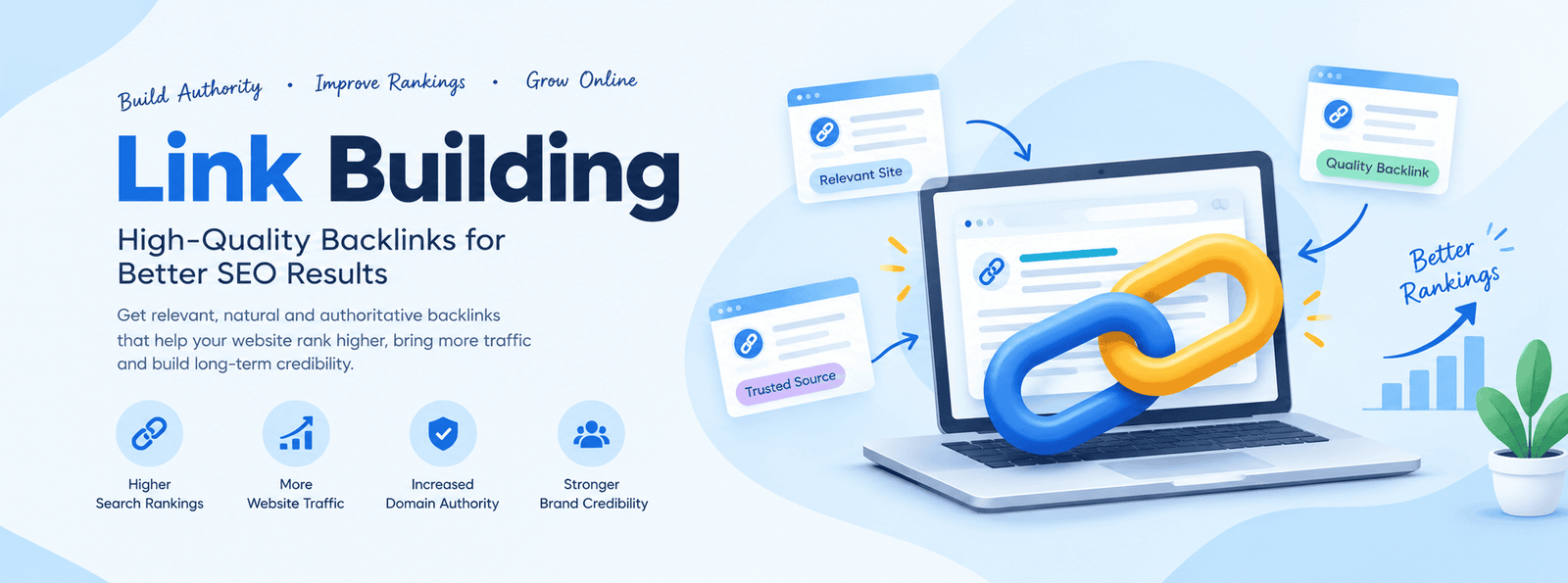
Off-Page SEO: A Complete Guide to Link Building
Off-page SEO is an important part of search engine optimization that focuses on activities outside your website. One of the most important off-page SEO techniques is link building. It helps search engines understand that other websites find your content useful and trustworthy.
What Is Link Building?
Link building is the process of getting links from other websites to your own website. These links are called backlinks.
For example, if a marketing website writes an article about SEO and adds a link to your SEO blog, that link is a backlink for your website.
Search engines can use backlinks as one of many signals when evaluating the relevance and authority of web pages.
Why Is Link Building Important?
Link building can help your website in several ways:
- Improves website visibility: Quality backlinks can help search engines discover and understand your website.
- Builds authority: Links from relevant and trustworthy websites can strengthen your site’s reputation.
- Brings referral traffic: People can click a backlink and visit your website.
- Helps content discovery: Search engines can discover new pages through links.
- Supports SEO growth: A strong backlink profile can contribute to your overall SEO strategy.
Types of Links
There are different types of links that you may come across in SEO.
1. Internal Links
Internal links connect one page of your website to another page on the same website.
Example:
Your blog about “Keyword Research” links to your “On-Page SEO” service page.
Internal linking helps users navigate your website and helps search engines understand the relationship between your pages.
2. External Links
External links point from your website to another website. They can be useful when you want to reference a reliable source or provide additional information.
3. Backlinks
Backlinks are links from another website pointing to your website. These are particularly important in off-page SEO.

What Makes a Good Backlink?
Good backlinks are links from trusted, relevant, and high-quality websites to your website. They can help search engines understand that your website is useful and trustworthy.
Examples of Good Backlinks
- Relevant backlinks
A digital marketing website receiving a link from a marketing or SEO-related website. - High-authority website links
A backlink from a well-established and trustworthy website. - Editorial backlinks
A website naturally links to your content because it finds your information useful. - Guest post backlinks
A relevant, high-quality website links to your site from a genuinely useful guest article. - Business listing backlinks
Links from legitimate business directories and local listings that provide real business information. - Resource page backlinks
Your website is included as a useful resource on another relevant website. - Natural mentions
Another website mentions your brand and links to your website because it is relevant to the topic.
Not every backlink has the same value. A useful backlink generally comes from a website that is:
- Relevant to your topic
- Trustworthy and established
- Contextually related to your content
- Naturally placed within useful content
- Helpful to the reader
For example, a backlink to an SEO website from a relevant marketing publication is more contextually useful than a random link from an unrelated website.
What are Bad Backlinks?
Bad backlinks are links from other websites to your website that can harm your SEO or make your website look untrustworthy to search engines.
Common types of bad backlinks
- Links from spam websites
Links from websites created mainly for spam or automatically generated content. - Paid links made to manipulate rankings
Buying backlinks specifically to increase your Google ranking can violate Google’s spam policies. - Irrelevant backlinks
For example, a digital marketing website getting hundreds of links from unrelated gambling or random websites. - Link farms
Websites or networks created mainly to exchange or generate large numbers of backlinks. - Comment spam links
Posting your website link repeatedly in blog comments, forums, or discussion sections without adding useful information. - Low-quality directory links
Links from directories that exist mainly to create backlinks rather than provide useful business information. - Excessive exact-match anchor text
For example, repeatedly getting backlinks using exactly “best digital marketing agency” instead of natural variations. - Hacked or injected links
Links placed on another website without the website owner’s permission.
Bad backlink vs Good backlink :-
| Good backlink | Bad backlink |
|---|---|
| Relevant website | Irrelevant website |
| Trusted website | Spammy website |
| Natural link | Manipulative link |
| Useful to readers | Created only for SEO |
| Relevant anchor text | Excessive keyword stuffing |
| Editorially earned | Paid/manipulated |
Link Building Techniques
Link building is the process of getting backlinks from other websites to your website. Good link building focuses on earning useful, relevant, and trustworthy links.
1. Guest Posting
Write a useful article for another relevant website and include a natural link to your website.
Example:
A digital marketing website writes an SEO article for a marketing blog and links to its own SEO guide.
2. Broken Link Building
Find a broken link on another website and suggest your relevant page as a replacement.
Example:
A website has a broken link to an old SEO guide → you offer your updated SEO guide.
3. Business Listings
Submit your business to legitimate business directories and local listing websites.
Example:
Adding your business website to relevant local business directories.
4. Resource Link Building
Create useful resources such as guides, checklists, templates, statistics, or tutorials that other websites may want to reference.
5. Skyscraper Technique
Find popular content in your industry, create something more useful or comprehensive, and reach out to websites that linked to the original content.
6. Digital PR
Create newsworthy content, research, surveys, or reports that journalists and websites may mention and link to.
7. Infographic Link Building
Create a useful infographic and share it with relevant websites that may want to reference or embed it.
8. Competitor Backlink Analysis
Analyze where competitors are getting backlinks and identify relevant opportunities that you can pursue yourself.
9. Unlinked Brand Mentions
Find websites that mention your brand but don’t link to your website. You can contact them and ask whether they can add the relevant link.
10. Testimonials & Reviews
Write genuine testimonials for products or services you actually use. Some businesses may publish the testimonial with a link to your website.
11. Forum & Community Participation
Participate genuinely in relevant communities and provide helpful answers. Links should only be used when they genuinely help users—not as a way to spam backlinks.
12. Linkable Content
Create content that naturally attracts links, such as:
- Original research
- Statistics
- Free tools
- Detailed guides
- Case studies
- Checklists
- Industry reports
How to Build Backlinks Safely
Safe backlink building means getting relevant, natural, and trustworthy links without trying to manipulate search rankings.
1. Create valuable content
First, create content that people actually want to reference.
Examples:
- SEO guides
- How-to articles
- Case studies
- Original research
- Checklists
- Infographics
- Free templates
2. Get links from relevant websites
Focus on websites related to your industry.
Example:
If your website is about digital marketing, backlinks from SEO, advertising, business, or marketing websites are more relevant than links from unrelated websites.
3. Use natural anchor text
Don’t use the same keyword repeatedly.
Instead of always using:
best digital marketing agency
Use natural variations such as:
- Learn more about digital marketing
- This SEO guide
- Visit the website
- Digital marketing resources
4. Prefer quality over quantity
Don’t try to get hundreds of backlinks quickly. A smaller number of genuine, relevant links can be more useful than a large number of spammy links.
5. Do guest posting carefully
Write genuinely useful articles for relevant websites. Avoid publishing the same article on many websites or using guest posts only to create keyword-rich links.
6. Use legitimate business listings
If you have a real business, you can create profiles on relevant and legitimate business directories. Keep your business information accurate and consistent.
7. Try broken-link building
Find broken links on relevant websites and suggest your useful page as a replacement.
8. Avoid buying backlinks for ranking purposes
Don’t purchase links simply to manipulate search rankings. Also avoid link exchanges or automated services that promise “1000 backlinks in one day.”
9. Avoid spam
Don’t create backlinks through:
- Spam comments
- Automated backlink software
- Private link networks
- Irrelevant directories
- Hidden links
- Mass forum/profile links
10. Monitor your backlink profile
Regularly check which websites link to you using tools such as Google Search Console and other SEO tools. Investigate unusual patterns rather than automatically trying to remove every low-quality link.
Simple formula
Valuable content + Relevant websites + Natural links + Genuine outreach = Safer link building
Tools For Backlinks :-
| Tool | What you can use it for |
|---|
| Google Search Console | Check backlinks Google has discovered for your website |
| Ahrefs | Backlink analysis, competitor backlinks, link opportunities |
| Semrush | Backlink audit, competitor research, link-building opportunities |
| Moz Link Explorer | Check backlinks and domain/link authority metrics |
| Ubersuggest | Backlink overview and competitor backlink research |
| Majestic | Backlink analysis and link intelligence |
| Screaming Frog | Crawl websites and analyze links and technical SEO |
Conclusion
Link building is an important part of off-page SEO, but successful SEO is not about getting as many links as possible. The focus should be on earning relevant, useful, and trustworthy backlinks that help both search engines and users understand the value of your website.
By creating valuable content, building genuine relationships, and using ethical link-building techniques, you can develop a stronger off-page SEO strategy over time.
Leave a Reply