 Skip to content
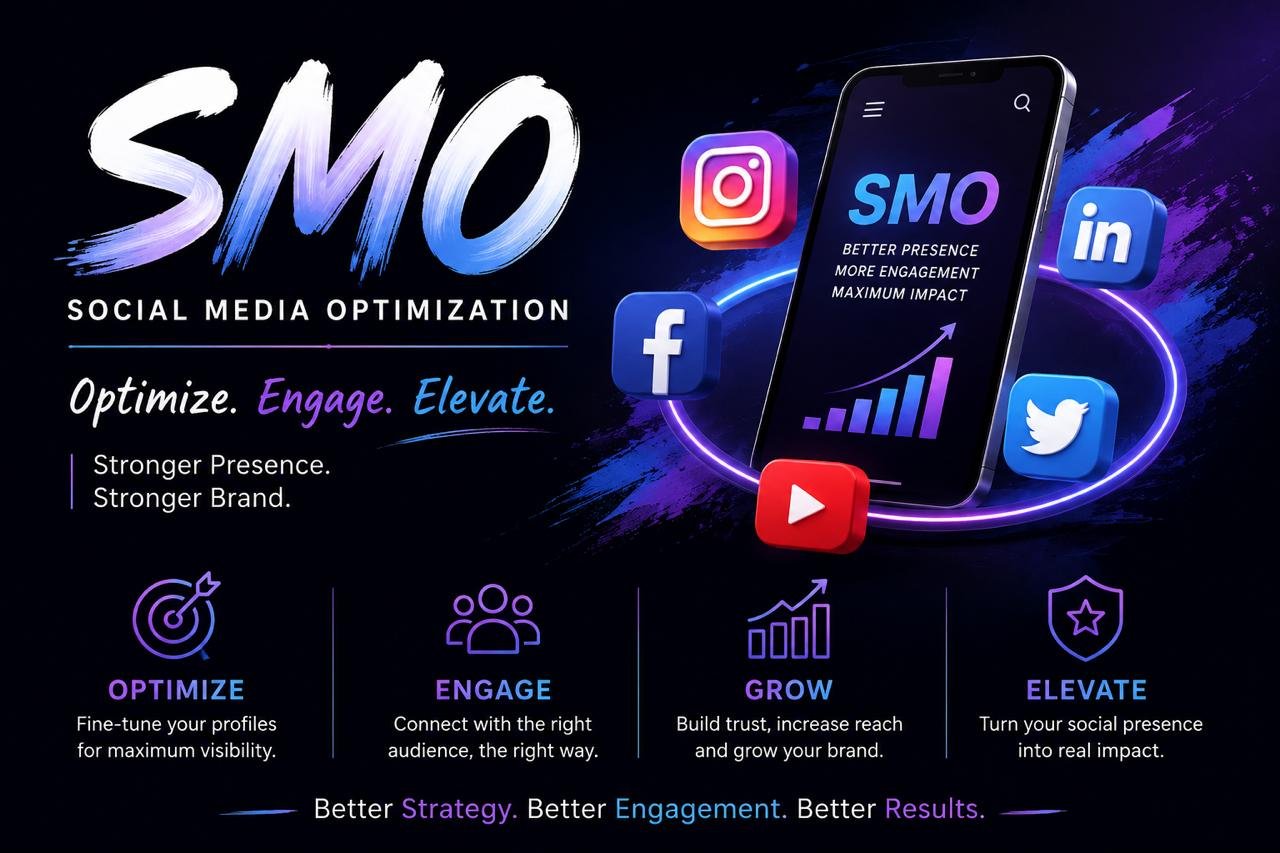
The Complete Guide to Building a Stronger Brand Online
Social media is no longer just a place to post pictures, share updates, or follow trends. For modern businesses, it has become one of the most powerful ways to build visibility, connect with customers, and turn attention into real business opportunities.
But simply being active on social media isn’t enough.
Your brand needs the right Social Media Optimization (SMO) strategy to reach the right audience, communicate your value, and create a strong digital presence.
In this guide, we’ll explore what SMO means and how social media strategy and profile optimization can work together to help your business grow online.
What is Social Media Optimization (SMO)?
Social Media Optimization, commonly known as SMO is the process of improving a brand’s social media presence so that it becomes more visible, engaging and effective.
It involves much more than posting regularly. SMO includes optimizing your profiles, creating valuable content, understanding your audience, improving engagement and developing strategies that encourage people to discover and interact with your brand.
Think of your social media profile as your brand’s digital storefront.
If it looks confusing, outdated, or inactive, visitors may leave. But if it looks professional, communicates clearly, and provides valuable content, people are more likely to trust your brand.
Social Media Strategy:Turn Attention Into Engagement
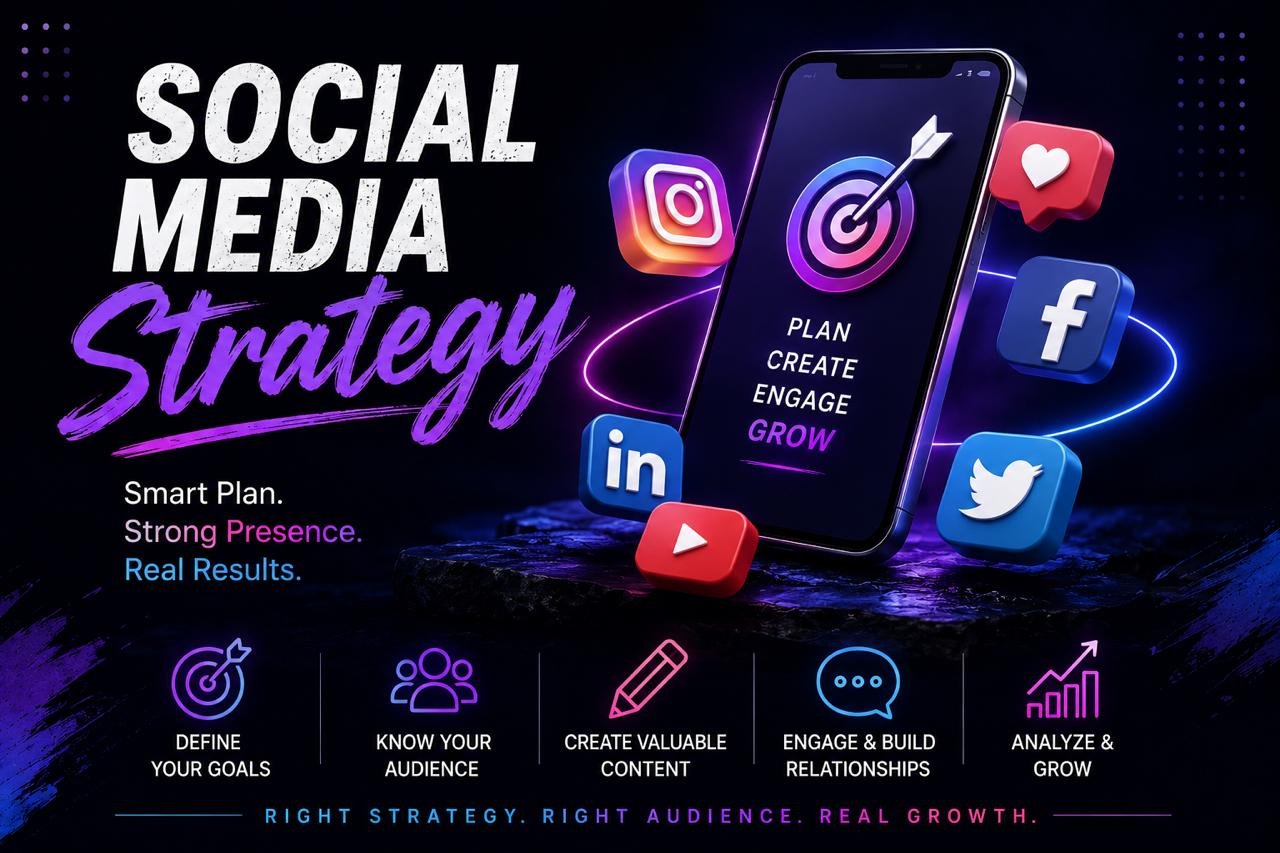
Once your marketing direction is clear, the next step is creating a social media strategy.
A strong social media strategy focuses on what you post, where you post it, and how you connect with your audience.
Choose the Right Platforms
You don’t necessarily need to be active on every social media platform.
Instead, focus on platforms where your target audience is actually spending time.
Depending on your business, this could include:
* Instagram
* Facebook
* LinkedIn
* YouTube
* Pinterest
* X
Being consistent on two or three relevant platforms is often more effective than spreading your efforts across every platform without a clear plan.
Create Valuable Content
People don’t follow brands simply because they want advertisements.
They follow brands that give them something useful, interesting, inspiring, or entertaining.
Your content can include:
Educational content – Tips, guides, tutorials, and industry knowledge.
Engaging content – Questions, polls, opinions, and interactive posts.
Entertaining content – Relatable posts, trends, humour, and creative videos.
Promotional content – Products, services, offers, launches, and testimonials.
Behind-the-scenes content – Your team, process, workplace, or journey.
The goal is to create a healthy balance between educating, engaging, and selling.
Be Consistent
Consistency builds recognition.
Create a realistic content schedule and maintain it instead of posting heavily for a few days and then disappearing for weeks.
Consistency doesn’t mean posting just for the sake of posting.
It means consistently providing your audience with content that has a purpose.
Measure and Improve
A good social media strategy should evolve.
Monitor metrics such as:
* Reach
* Impressions
* Engagement
* Profile visits
* Website clicks
* Leads
* Follower growth
* Content performance
Use these insights to understand what your audience responds to and improve your future content.
Profile Optimization: Make a Strong First Impression
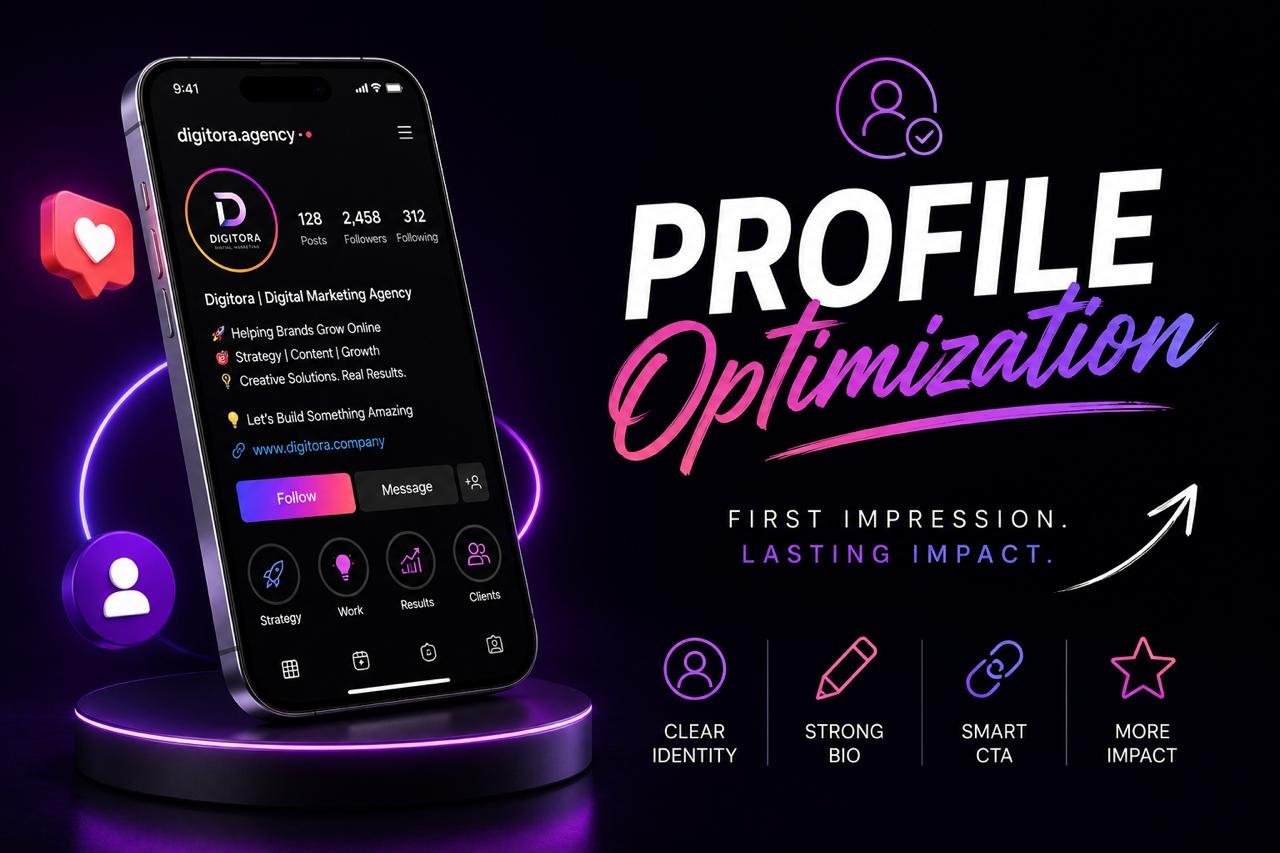
Your social media profile is often the first interaction someone has with your brand.
You may have excellent content, but if your profile isn’t optimized, potential customers may never take the next step.
Use a Clear Profile Picture.
Your profile picture should immediately represent your brand.
For a business, this will usually be your logo or another recognizable brand identity.
Make sure it is clear even when displayed as a small profile icon.
Write a Strong Bio.
Your bio should quickly answer three questions:
Who r u?
What do u do?
How can u help your potential coustmer?
Avoid filling your bio with unnecessary words.
Keep it simple, clear and focused on your audience.
Optimize Your Username and Name.
Use a recognizable username and make sure your profile name clearly represents your business.
Where appropriate, include relevant keywords so people can understand what your business does and potentially discover your profile through platform search.
Add a Clear CALL-TO-ACTION.
Don’t leave visitors wondering what to do next.
Your profile can guide them toward an action such as:
* Visit your website
* Contact your business
* Book a consultation
* Send a message
* View your services
* Download a resource
A simple CALL-TO-ACTION(CTA) can turn profile visitors into potential customers.
Keep Your Branding Consistent.
Your profile should feel connected to your overall brand.
Keep your:
* Logo
* Colours
* Fonts
* Visual style
* Tone of voice
* Messaging
consistent across your website and social media channels.
This creates a stronger and more professional brand identity.
Paid Social Media Advertising: Meta Ads & LinkedIn Ads

Paid social media advertising helps businesses reach the right audience through targeted ads on social platforms. It can increase brand awareness, website traffic, leads, app installs, and sales.
What Is Paid Social Media Advertising?
It is the process of paying social platforms to display your ads to selected audiences. Businesses can control their audience, budget, ad format, placement, and campaign objective.
Meta Ads-:
Meta Ads allow businesses to advertise across Facebook and Instagram. They are commonly used for reaching consumers, building awareness, generating leads, driving website traffic, and increasing sales.
Key Meta Ad Elements
* Campaign objective
* Audience targeting
* Ad creative
* Placements
* Budget & bidding
* Tracking & optimization
Popular Meta Ad Formats
Image Ads • Video Ads • Carousel Ads • Stories • Reels
LinkedIn Ads-:
LinkedIn Ads focus on reaching professional and business audiences. They are particularly useful for B2B marketing, lead generation, professional services, and company-focused campaigns.
LinkedIn Targeting
Advertisers can target audiences using factors such as:
Job Title • Industry • Company • Job Seniority • Company Size • Skills • Location
Popular LinkedIn Ad Formats
Single Image • Video • Carousel • Document • Lead Gen Forms • Sponsored Messaging
Meta Ads vs LinkedIn Ads
Meta Ads: Best suited to broad consumer and interest-based audience reach across Facebook and Instagram.
LinkedIn Ads: Designed around professional and business-focused audiences.
The right platform depends on your audience, objective, offer, budget, and marketing strategy.
How paid social advertising works-
1. Set Your Goal → Define what you want to achieve.
2. Find Your Audience → Identify the people most relevant to your offer.
3. Create Your Ad → Use strong visuals, copy, and a clear CTA.
4. Set Budget & Launch → Choose your spending and campaign settings.
5. Track & Optimize → Analyze performance and improve your campaigns.
Track metrics such as:
Reach • Impressions • CTR • CPC • CPM • Leads • Conversions • Cost per Lead • ROAS
Performance Analysis & Reporting in Digital Marketing:
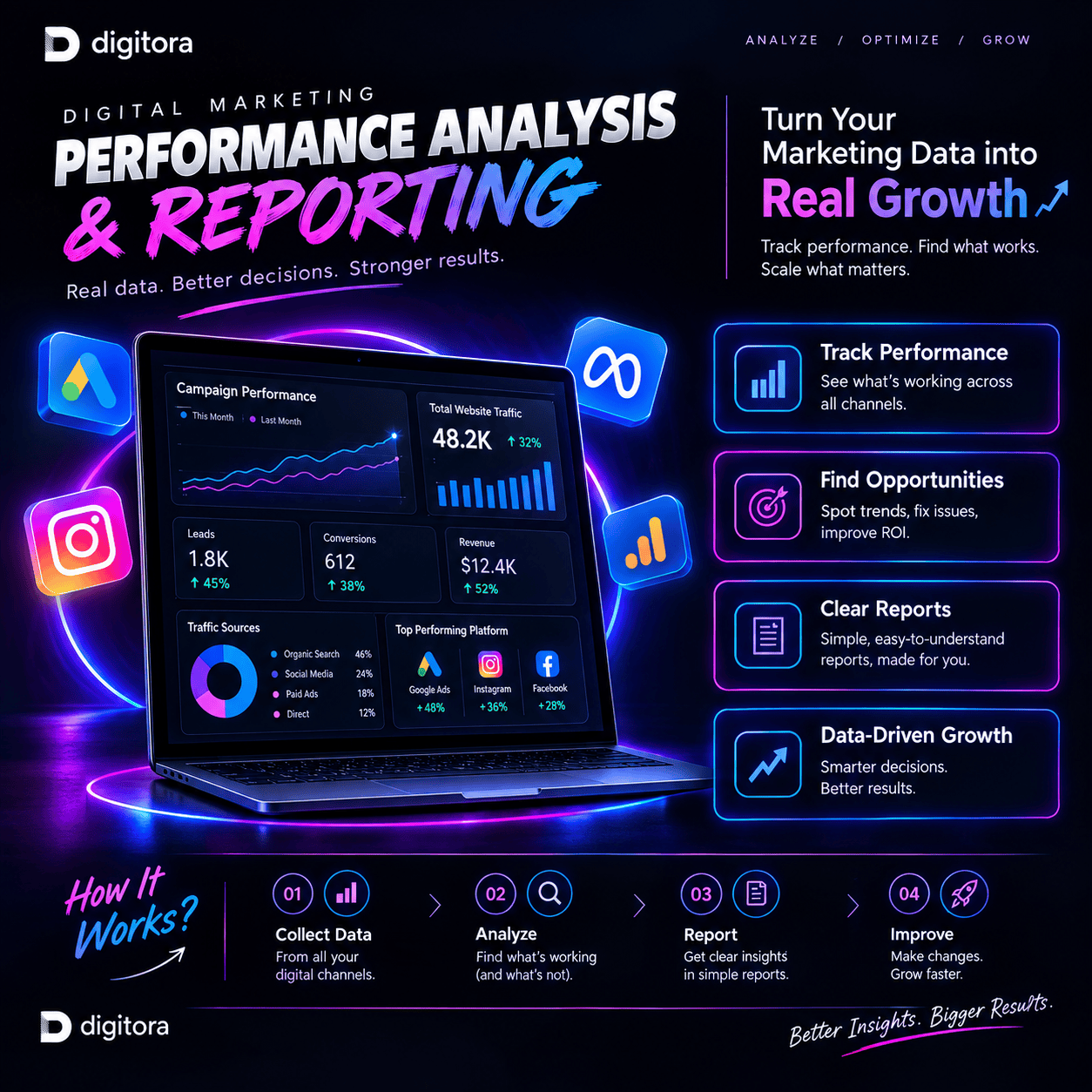
Digital marketing is not just about launching campaigns—it is about understanding what is working, what is not, and how to improve results. Performance analysis and reporting help businesses turn marketing data into meaningful insights and better decisions.
From website traffic and SEO rankings to social media engagement, leads, conversions, and advertising performance, analyzing the right data gives businesses a clear picture of their digital growth.
What Is Performance Analysis in Digital Marketing?
Performance analysis is the process of collecting, measuring, and interpreting marketing data to understand how digital campaigns and channels are performing.
It helps answer important questions:
* Are we reaching the right audience?
* Which marketing channels generate the most traffic?
* Which campaigns generate leads or sales?
* What content performs best?
* How much are we spending to acquire customers?
* Where can performance be improved?
The goal is not simply to collect numbers but to turn those numbers into actionable insights.
What Is Digital Marketing Reporting?
Digital marketing reporting is the process of presenting marketing performance in a clear and understandable format.
A good report brings important data together so businesses can quickly understand their progress, identify trends, and make informed decisions.
Reports can include performance from:
SEO • Paid Advertising • Social Media • Website • Content Marketing • Email Marketing
Important Digital Marketing KPIs
The right metrics depend on the campaign and business objective. Common KPIs include:
Website & Traffic
Users • Sessions • Traffic Sources • Engagement Rate • Conversions
SEO
Organic Traffic • Keyword Rankings • Clicks • Impressions • CTR
Social Media
Reach • Impressions • Engagement • Followers • Link Clicks
Paid Advertising
CTR • CPC • CPM • Conversions • Cost Per Lead • ROAS
Business Performance
Leads • Sales • Conversion Rate • Customer Acquisition Cost • ROI
How Performance Analysis Works-:
An effective analysis generally follows a simple process:
1. Set Goals → 2. Choose KPIs → 3. Collect Data → 4. Analyze Performance → 5. Identify Insights → 6. Optimize → 7. Report Results
This process helps businesses move from simply tracking data to actively improving their digital marketing strategy.
Tools for Digital Marketing Analysis
Different tools can be used to collect and analyze performance data, including:
* Google Analytics for website and user behavior analysis
* Google Search Console for organic search performance
* Meta Ads Manager for Facebook and Instagram advertising
* LinkedIn Campaign Manager for LinkedIn advertising
* SEO tools for rankings, keywords, backlinks, and competitor analysis
* Reporting dashboards for bringing data from multiple channels together
What Makes a Good Marketing Report?
A useful report should be clear, relevant, visual, and action-oriented.
Instead of overwhelming stakeholders with numbers, focus on:
What happened? → Why did it happen? → What does it mean? → What should we do next?
Include important KPIs, performance trends, campaign comparisons, key insights, challenges, and recommended next steps.
Why Performance Analysis Matters
Without performance analysis, businesses may continue investing time and money into strategies without knowing their actual impact.
Regular analysis helps businesses:
* Identify high-performing channels
* Improve marketing campaigns
* Understand customer behavior
* Find opportunities for growth
* Reduce wasted marketing spend
* Make data-driven decisions
* Measure return on marketing investment
Performance analysis and reporting turn digital marketing data into business intelligence. By tracking the right KPIs, analyzing performance across channels, and turning insights into action, businesses can continuously improve their digital marketing results.
A strong digital marketing strategy does not end when a campaign goes live it improves through measurement, analysis, reporting, and optimization.
Explore More with Digitora
Learn more about digital marketing analytics, KPIs, Google Analytics, SEO performance tracking, social media analytics, campaign reporting, conversion tracking, and marketing dashboards to build a data-driven digital growth strategy.