 Skip to content
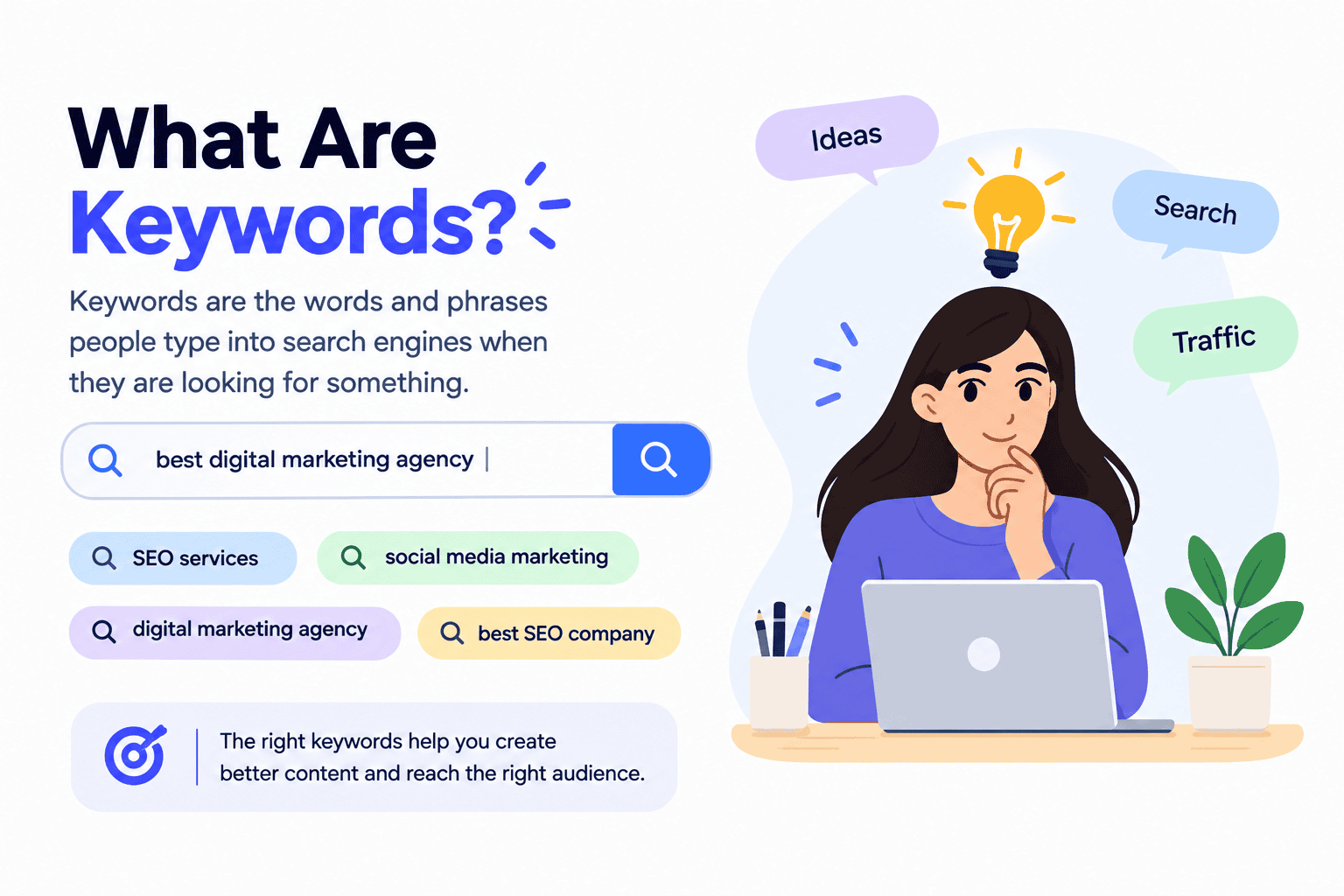
Keyword Research: A Simple Guide to Finding the Right Keywords
Keyword research is one of the most important parts of SEO. It helps you understand what people search for on Google and other search engines when they are looking for information, products, or services.
For example, if someone wants to improve their website’s online visibility, they might search for terms like “digital marketing agency,” “SEO services,” “SEO company near me,” or “how to improve website ranking.”
What Is Keyword Research?
Keyword research is the process of finding and analyzing the words and phrases that people use when searching online.The goal is not simply to find keywords with high search volume.
You also need to understand whether a keyword is relevant to your business, how competitive it is, and what the person searching for it actually wants.
For example, if you provide SEO services in Chandigarh, keywords such as “SEO services Chandigarh” or “SEO company in Chandigarh” may be more relevant to your business than a very broad keyword such as “SEO.”
Good keyword research helps you choose the right topics and keywords for your website pages, blogs, and other content.
Why Is Keyword Research Important for SEO?
Keyword research helps you understand your target audience and create useful content for them.
Here are some important benefits of keyword research:
1. Understand What Your Audience Searches For
Keyword research gives you an idea of what potential customers are searching for online.Instead of guessing what people want, you can use keyword data to understand their interests and questions.
2. Find Relevant Keywords for Your Website
Every page on your website should have a clear topic.Keyword research can help you identify relevant keywords for your home page, service pages, product pages, and blog articles.
For example, a digital marketing agency could target keywords related to:SEO servicesSocial media marketingGoogle AdsFacebook advertisingLocal SEODigital marketing services
3. Create Better Blog Topics
Keyword research can also help you find topics that people are interested in.For example, instead of writing a general article about SEO, you might find searches related to:
What is SEO?
How does keyword research work?
How to improve website rankingWhat is on-page SEO?
What is off-page SEO?
These searches can give you useful ideas for creating helpful blog content
4. Reach the Right Audience
Not every search is equally valuable for your business.A keyword should be relevant to the people you want to reach.
For example, someone searching for “what is SEO” may only be looking for information, while someone searching for “SEO services for small business” may be looking for a service provider.Understanding this difference helps you create content for different stages of the customer’s journey.
Types of Keywords
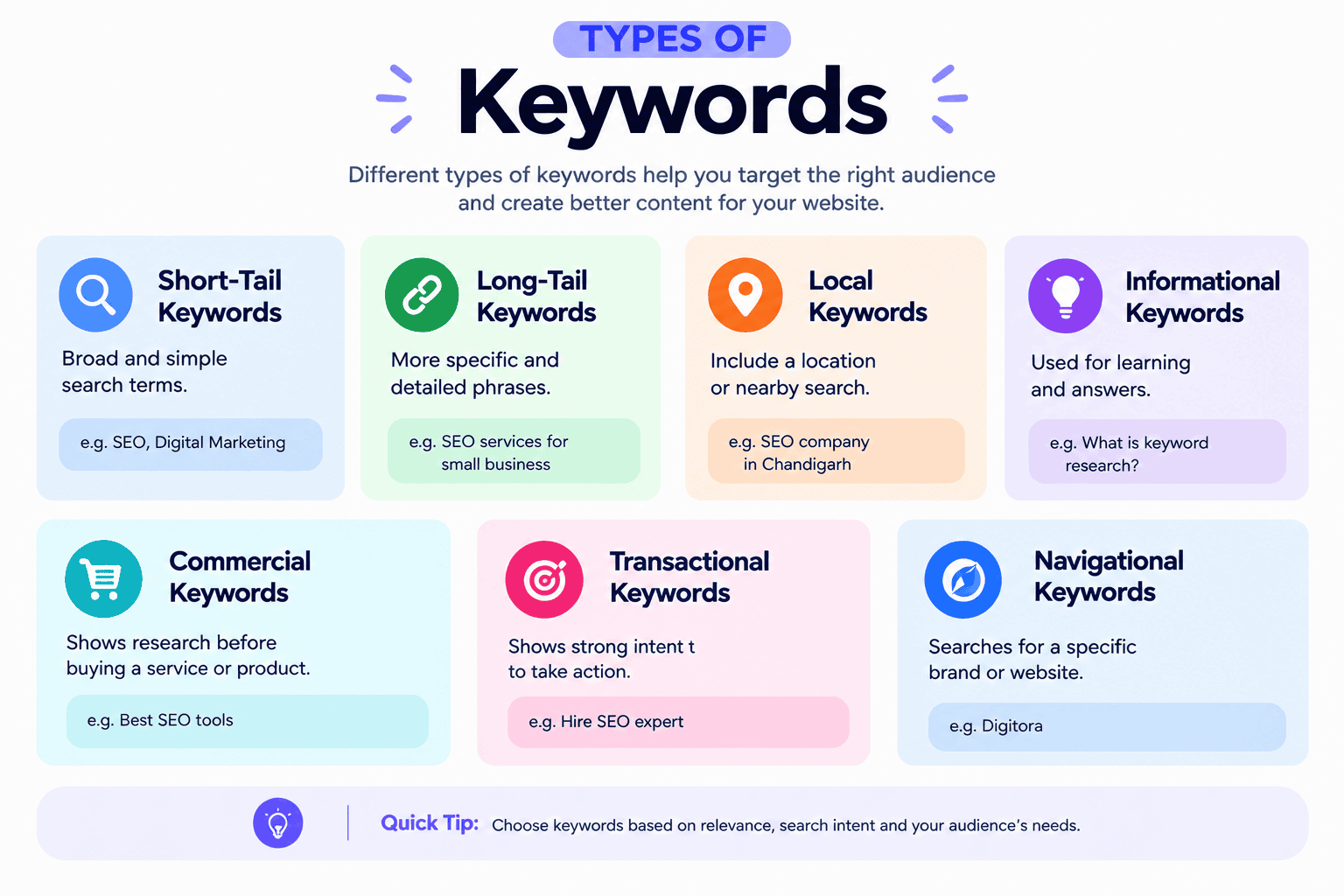
Keywords can be classified in different ways. Understanding these types can help you build a better SEO strategy.
Short-Tail Keywords
Short-tail keywords are usually short and broad search terms.Examples:SEO ,Digital marketing ,Social media ,Web design .These keywords can have high search volume, but they can also be highly competitive and may have a broad search intent.
Long-Tail Keywords
Long-tail keywords are more specific search phrases.Examples:
SEO services for small businesses
Digital marketing agency in Chandigarh
How to improve local SEO
Best SEO strategy for a new website
Long-tail keywords can help you target more specific searches and understand the user’s intent more clearly.
Local Keywords
Local keywords include a location or indicate that the user is looking for a nearby business.Examples:
SEO agency in Chandigarh
Digital marketing company near me
SEO services in Punjab
These keywords can be useful for businesses that serve customers in a specific city or area.
What Is Search Intent?
Search intent means the reason behind a person’s search.Before choosing a keyword, it is important to understand what the searcher wants.
For example, if someone searches “what is keyword research,” they probably want to learn about the topic.
If someone searches “keyword research tools,” they may be looking for tools they can use.
If someone searches “SEO agency in Chandigarh,” they may be looking for a company that provides SEO services.
Understanding search intent helps you create content that actually answers the user’s needs.
How to Do Keyword Research
Keyword research is an important step before writing a blog. It helps you understand what people are searching for and what information they want to find.Instead of choosing a blog topic randomly, keyword research helps you choose a topic based on real searches.
For example, if you want to write about SEO, you could write a general article about “SEO.” But after doing keyword research, you may discover more specific searches such as “how to improve SEO,” “keyword research for beginners,” or “how to do keyword research.”
1. Start With a Main Topic
First, choose the main topic of your blog.
Think about:
What does my business offer?
What does my audience want to learn?
What problems can I help them solve?
What questions might they search on Google?
For example, if your business provides digital marketing services, possible topics could be:SEOKeyword researchSocial media marketingGoogle AdsLocal SEOWebsite optimizationLet’s say you choose keyword research as your main topic
.2. Find Seed Keywords
A seed keyword is a simple word or phrase that describes your main topic.For a keyword research blog, your seed keywords could be:
keyword research
keyword research tools
SEO keywords
finding keywords
keyword research for SEO
These keywords are the starting point for finding more specific ideas.
3. Find More Keyword Ideas
Now expand your list using keyword research tools.
Some useful tools include:
Google Keyword Planner
Semrush
Ahrefs
Ubersuggest
GoogleTrends
AnswerThePublic
You can also use Google itself.Start typing your topic into Google and look at the suggestions that appear. You can also check the “People also ask” section and related searches.These can give you ideas about the questions and topics people are interested in.
4. Check Search Volume
Search volume tells you approximately how many times people search for a keyword during a given period.For example:
Keyword: keyword research
Search volume: 10,000 search
.However, don’t choose a keyword only because it has high search volume.A keyword with lower search volume can still be valuable if it is highly relevant to your audience and has a clear purpose.
5. Check Keyword Difficulty
Keyword difficulty helps you understand how competitive a keyword may be.For example:Keyword:
Very highThis may be difficult for a new website to rank for because many established websites are already competing for it.Instead, you could look for a more specific keyword such as:“keyword research for small business”More specific keywords may have lower search volume, but they can be easier to target and may match your audience better.
6. Understand Search Intent
Search intent means why someone is searching for a keyword.This is one of the most important parts of keyword research.
For example:“What is keyword research?”The person probably wants to learn.“Best keyword research tools”The person is probably comparing tools.“Keyword research service”The person may be looking for someone to provide the service.
Before choosing a keyword, search it on Google and look at the results.
Ask yourself:
What type of pages are ranking?
Are they blogs, guides, service pages, or product pages?
What questions are they answering?
Can my blog provide a useful answer?
Your content should match what the searcher expects
Where Should You Use Keywords?
Once you have selected your keywords, use them naturally in your content.
You can use relevant keywords in places such as:
Page titles
Headings
Main content
Meta titles
Meta descriptions
URLsImage
alt text
Internal links
However, avoid using the same keyword too many times just to try to rank higher.
Leave a Reply