 Skip to content
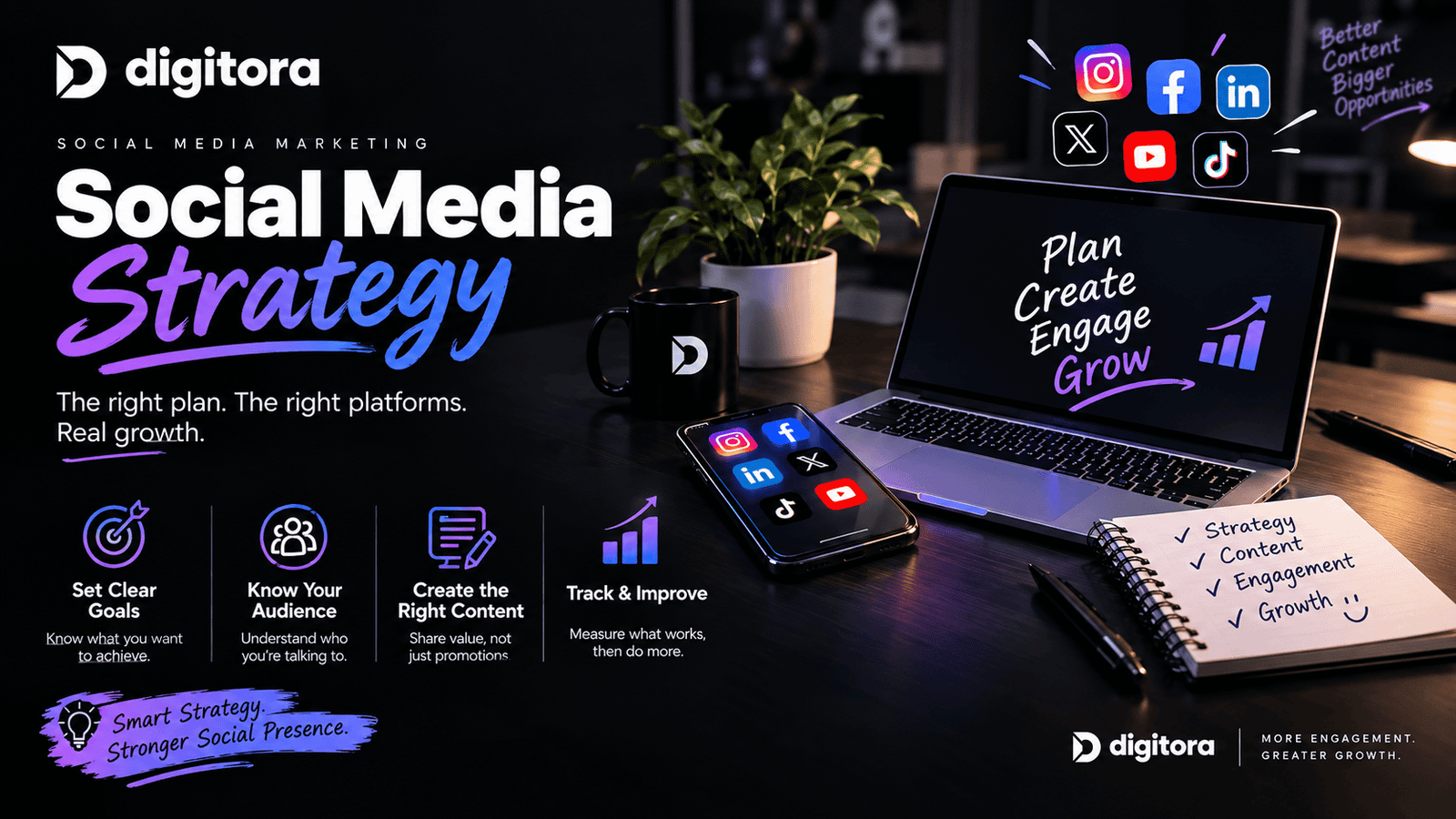
Social Media Strategy: A Complete Guide to Building a Strong Brand Presence
Social media is no longer just a place to post pictures, reels, or promotional offers. For modern businesses, it has become a powerful channel for building brand awareness, connecting with customers, generating leads, and driving long-term growth.
But simply being active on Instagram, Facebook, LinkedIn, YouTube, or other platforms is not enough. Without a clear plan, businesses often post inconsistently, target the wrong audience, follow every trend, and struggle to understand why their content isn’t producing results.
That’s where a social media strategy comes in.
A well-planned social media strategy gives your brand a clear direction. It defines what you want to achieve, who you want to reach, what content you should create, which platforms you should use, how frequently you should publish, and how you will measure success.
At Digitora, we believe social media should not just generate likes it should create attention, trust, engagement, and meaningful business results.
What Is a Social Media Strategy?
A social media strategy is a structured plan that explains how a business will use social media platforms to achieve specific marketing and business objectives.
It brings together:
* Business goals
* Target audience research
* Platform selection
* Content strategy
* Content planning
* Brand positioning
* Community engagement
* Organic social media
* Paid social media
* Performance tracking
* Continuous optimization
Instead of asking “What should we post today?” a strategy helps you answer a much more important question.
“Why are we posting this, who is it for, and what result do we want?”
That shift from random posting to purposeful communication is what makes social media marketing more effective.
Why Is Social Media Strategy Important?
Millions of businesses are competing for attention online. Creating attractive content is only one part of the challenge.
A strategy helps your business create a consistent and recognizable presence while connecting social media activity to actual business objectives.
1. Builds Brand Awareness
Consistent and valuable content helps people recognize your brand and understand what you offer.
2. Reaches the Right Audience
A strategy allows you to identify your ideal customers based on factors such as interests, needs, location, demographics, and online behavior.
3. Creates Customer Relationships
Social media allows businesses to communicate directly with their audience through comments, messages, Stories, live content, and other interactive formats.
4. Generates Leads and Sales
Strategically designed content can guide potential customers from discovering your brand to visiting your website, contacting your business, or making a purchase.
5. Creates Consistency
A content plan prevents your social profiles from becoming inactive or inconsistent.
6. Makes Marketing Measurable
Analytics allow you to understand which content is performing and which areas need improvement.
How to Create an Effective Social Media Strategy?
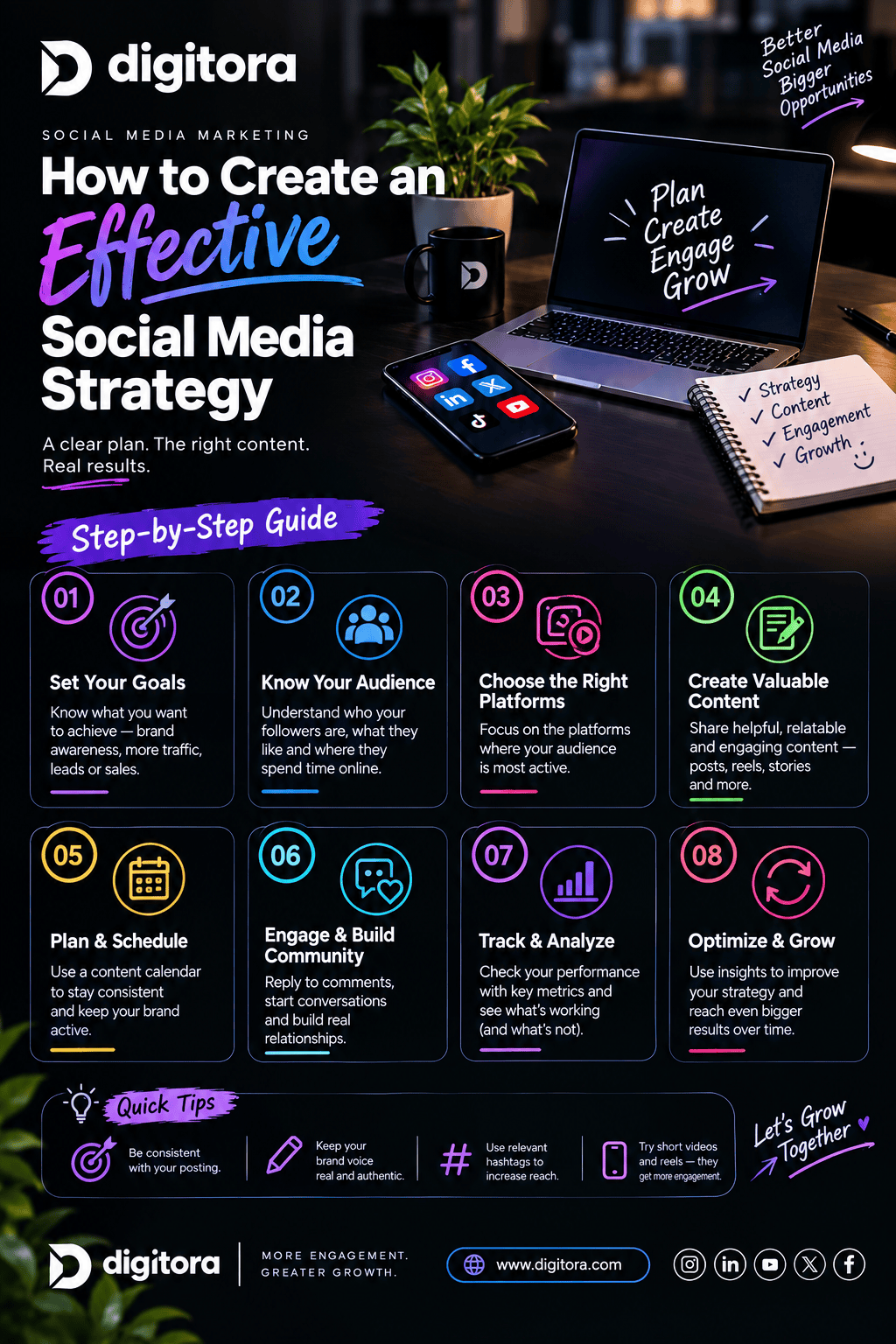
Step 1: Define Your Social Media Goals
Before creating content, decide what you want social media to achieve.
Your goals could include:
* Increasing brand awareness
* Growing your audience
* Generating leads
* Increasing website traffic
* Improving engagement
* Building an online community
* Increasing sales
* Promoting products or services
* Establishing industry authority
Your goals should be specific and measurable.
A clear goal makes it easier to decide what content to create and which metrics to track.
Step 2: Understand Your Target Audience
You cannot create an effective social media strategy without understanding who you’re talking to.
Identify:
* Age group
* Location
* Interests
* Profession
* Problems and challenges
* Buying behavior
* Preferred platforms
* Content preferences
* Questions they frequently ask
* Reasons they may choose your competitors
Think about your ideal customer as a real person rather than simply “everyone.”
The better you understand your audience, the easier it becomes to create content that feels relevant to them.
Step 3: Choose the Right Social Media Platform
You don’t need to be everywhere.
The right platform depends on your audience, industry, content style, and business objectives.
Ideal for:
* Lifestyle brands
* Fashion
* Beauty
* Food
* Travel
* Personal brands
* Local businesses
* Creators
Useful formats include Reels, Stories, carousels, images, collaborations, and educational content.
Useful for:
* Local businesses
* Communities
* Older demographics
* Customer communication
* Paid advertising
* Groups
Particularly valuable for:
* B2B companies
* Professionals
* Consultants
* Agencies
* SaaS companies
* Personal branding
* Recruitment
YouTube
Useful for:
* Educational content
* Tutorials
* Reviews
* Demonstrations
* Long-form video
* Search-driven content
TikTok
Useful for:
* Short-form video
* Entertainment
* Trend-based content
* Creator-led marketing
* Reaching new audiences
Step 4: Create Your Content Pillars
Content pillars are the main themes your brand repeatedly talks about.
Instead of creating random posts, define 3–5 core content categories.
For example, a digital marketing agency could use:
1. Educational Content
Teach your audience something useful.
Examples:
* SEO tips
* Social media tips
* Website optimization
* Marketing mistakes
* Content creation ideas
2. Engagement Content
Encourage people to interact.
Examples:
* Questions
* Polls
* Quizzes
* Opinions
* This-or-that posts
3. Promotional Content
Showcase your products or services.
Examples:
* Service benefits
* Offers
* Case studies
* Testimonials
* Packages
4. Brand Content
Show the human side of the business.
Examples:
* Behind the scenes
* Team introductions
* Company culture
* Achievements
* Milestones
5. Inspirational or Entertaining Content
Create content people want to watch, share, or save.
A strong strategy balances different content purposes instead of making every post a sales pitch.
Step 5: Create Platform-Specific Content
One common mistake is creating exactly the same post for every platform.
Your core idea can remain the same, but the presentation should be adapted.
For example:
Topic: “Why businesses need SEO”
Instagram:
Create a short educational Reel or carousel.
LinkedIn:
Turn the idea into a professional insight or mini case study.
YouTube:
Create a detailed video explaining the concept.
Facebook:
Create an easy-to-understand post that encourages discussion.
This approach allows you to repurpose ideas without making your social presence feel repetitive.
Step 6: Focus on Valuable Content
Your audience follows your brand because your content gives them a reason to stay.
Before publishing, ask:
“What will the audience get from this post?”
Your content could:
* Teach
* Entertain
* Inspire
* Solve a problem
* Answer a question
* Start a conversation
* Help someone make a decision
Step 7: Create Strong Hooks and Calls to Action
People scroll quickly, so your content needs to capture attention.
Instead of:
“Social media is important for businesses.”
Try:
“Posting every day but still getting no customers?”
Other hook ideas:
* “3 social media mistakes killing your reach.”
* “Stop posting until you understand this.”
* “Your competitors are doing this on Instagram.”
* “Want more customers from social media?”
* “Here’s why your Reels aren’t converting.”
At the end of your content, give the audience a clear next step.
Examples:
* Follow for more tips
* Save this post
* Share with your team
* Comment your opinion
* Visit our website
* Send us a DM
* Book a consultation
Step 8: Build an Engagement Strategy
Social media is not a one-way communication channel.
Posting content is only the beginning.
Your strategy should also include:
* Replying to comments
* Responding to DMs
* Engaging with relevant accounts
* Answering customer questions
* Responding to mentions
* Creating interactive Stories
* Encouraging conversations
* Building a community
The goal is to turn followers into an audience and an audience into a community.
Step 9: Use Organic and Paid Social Together
Organic social media helps you build trust, community, and long-term visibility.
Paid social media can help you reach specific audiences and accelerate campaigns.
Depending on your objectives, paid campaigns can be used for:
* Brand awareness
* Website traffic
* Lead generation
* Product promotion
* Retargeting
* Sales
* Event promotion
The strongest approach is not necessarily choosing organic or paid. Instead, determine where each approach fits into your overall marketing funnel.
Step 10: Track Your Social Media Performance
A strategy without measurement is difficult to improve.
Important metrics include:
Reach
How many unique people saw your content?
Impressions
How many total times was your content displayed?
Engagement Rate
How actively are people interacting with your content?
Saves
Are people finding your content valuable enough to return to it?
Shares
Is your content valuable enough for people to send to others?
Follower Growth
Is your audience growing over time?
Website Traffic
Are social users visiting your website?
Leads
Are your social channels generating potential customers?
Conversions
Are social media visitors taking valuable actions?
Return on Investment
Is your social media activity contributing to business revenue?
Don’t judge your strategy using followers alone. A smaller but relevant audience can be more valuable than a large audience that never engages or converts.
Step 11: Analyze, Test and Improve
Social media strategy is not something you create once and never change.
Review your performance regularly.
Ask:
* Which posts received the most engagement?
* Which topics generated the most saves?
* Which content generated shares?
* Which platform brought the most traffic?
* Which posts generated leads?
* Which hooks performed best?
* What does the audience respond to?
* What should we stop doing?
Then use those insights to improve your next content cycle.
A modern strategy should be treated as a living plan that evolves with audience behavior, platform changes, and business goals. (Social Media Dashboard)
Common Social Media Strategy Mistakes
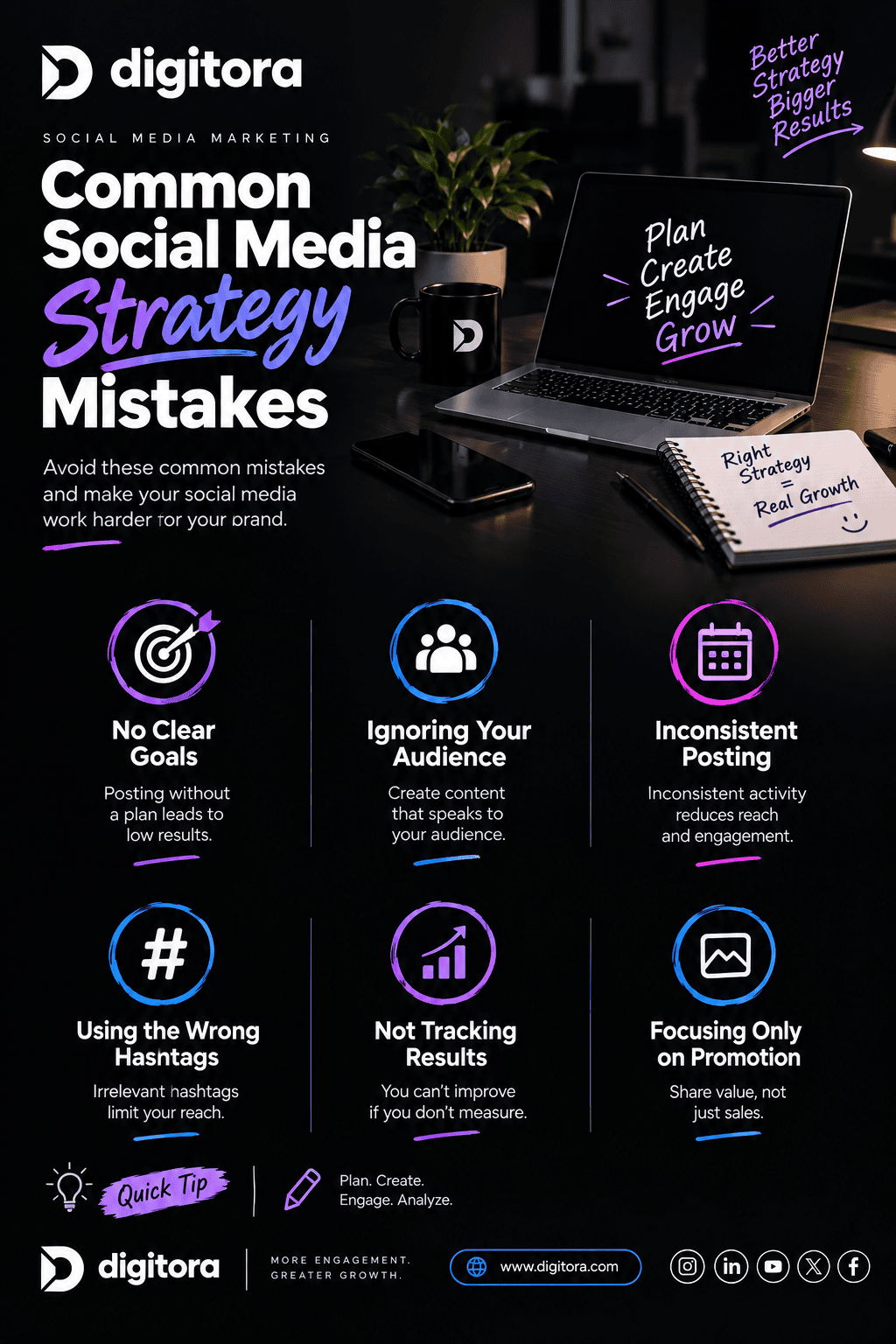
Avoid these common mistakes:
Posting Without a Goal
Every post doesn’t need to sell, but every post should have a purpose.
Trying to Be on Every Platform
Focus on the platforms that matter to your audience.
Copying Competitors
Research competitors, but develop your own positioning and brand voice.
Posting Only Promotional Content
People don’t follow brands just to see advertisements.
Ignoring Comments and Messages
Engagement is a two-way conversation.
Inconsistent Posting
A strong strategy requires consistency.
Chasing Every Trend
A trend is useful only when it makes sense for your brand and audience.
Ignoring Analytics
Without data, you’re relying on assumptions.
Focusing Only on Likes
Likes are only one part of performance. Saves, shares, clicks, leads, and conversions can provide much deeper insight.
Social Media Strategy vs Social Media Management
These terms are often confused.
Social Media Strategy is the plan.
It answers:
* What are we trying to achieve?
* Who are we targeting?
* Which platforms should we use?
* What content should we create?
* What is our brand positioning?
* How will we measure success?
Social Media Management is the execution.
It includes:
* Creating content
* Scheduling posts
* Publishing
* Community management
* Responding to comments
* Managing messages
* Monitoring performance
In simple words:
Strategy decides where you’re going. Management helps you get there.
How Digitora Can Help With Your Social Media Strategy
Your social media presence should be more than a collection of posts.
At Digitora, we help businesses develop social media strategies designed around their goals, audience, brand identity, and growth opportunities.
Our approach can include:
Audience Research → Platform Strategy → Content Pillars → Content Calendar → Content Creation → Community Engagement → Performance Analysis → Optimization
We focus on creating a social media presence that is consistent, purposeful, engaging, and aligned with your broader digital marketing goals.
Whether you’re launching a new brand, improving an existing social presence, or looking for a clearer direction, the right strategy can help turn social media into a valuable growth channel.
Frequently Asked Questions
What is a social media strategy?
A social media strategy is a structured plan for using social platforms to achieve specific business and marketing goals. It includes audience research, platform selection, content planning, engagement, and performance measurement.
Why does a business need a social media strategy?
A strategy helps businesses avoid random posting, reach the right audience, maintain consistency, create relevant content, and measure whether social media is contributing to business objectives.
How often should a business post on social media?
There is no universal posting frequency that works for every business. The ideal schedule depends on the platform, audience, resources, and content quality. Consistency and relevance are more important than simply posting as much as possible.
Which social media platform is best for my business?
It depends on your target audience and business model. Instagram can be valuable for visual and consumer-focused brands, LinkedIn for many B2B businesses and professionals, YouTube for educational or video-led businesses, and Facebook for communities, local businesses, and broader audiences.
What are the most important social media metrics?
Important metrics can include reach, impressions, engagement, saves, shares, follower growth, website clicks, leads, conversions, and revenue or ROI.
Can social media generate leads?
Yes. A well-planned strategy can use educational content, offers, landing pages, lead forms, DMs, advertising, and calls to action to move users from awareness toward becoming potential customers.
How long does it take to see results from social media?
Results vary depending on the business, audience, platform, content quality, competition, consistency, and objectives. Social media generally works best when approached as a long-term process of testing, learning, and optimization rather than a quick one-time campaign.
Leave a Reply